


Ambient, Chillout and Downtempo: History, Records and Artists
Resources / Field notes / Chill
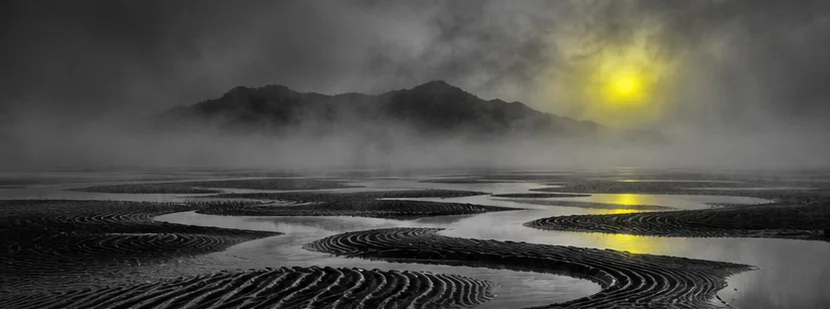
Ambient, chillout and downtempo are the slow end of electronic music, and each has its own history. This guide follows them from Erik Satie’s furniture music and Brian Eno’s airport records to the chill-out rooms of British raves, Ibiza sunsets and lounge bars, then names the albums and artists worth hearing first.
Key takeaways
- Brian Eno named ambient music with Ambient 1: Music for Airports (1978), building on Erik Satie’s earlier idea of furniture music.
- Ambient house came from late-1980s London chill-out rooms; The KLF’s Chill Out (1990) and The Orb’s 1991 debut album defined it.
- The word chillout comes from rave chill-out rooms and Ibiza sunset sessions such as those at Café del Mar, which opened in 1980.
- Lo-fi hip hop is slower and more sample-based than downtempo, usually around 70 to 90 BPM with loose, swung drums.
- Pauline Oliveros coined Deep Listening, a practice of attentive listening that shares its name with her late-1980s cistern recording.
On this page
- Who invented ambient music?
- What was Erik Satie’s furniture music?
- What is the difference between ambient and new age music?
- Why does ambient music often have no beat?
- Who started ambient house?
- Where does the word chillout come from?
- How did lounge music become part of electronic music?
- Is downtempo the same as lo-fi hip hop or chillhop?
- What are the essential ambient albums?
- What are the essential downtempo and trip hop albums?
- Who are the key nu jazz artists?
- What is drone music?
- What is deep listening?
- How should I listen to ambient music?
Where ambient music comes from
Who invented ambient music?
Brian Eno invented ambient music as a named genre with Ambient 1: Music for Airports (1978), though the idea of music meant to sit in a room like furniture goes back to the French composer Erik Satie in the late 1910s.
Eno had already explored the idea on Discreet Music (1975), which he traced to lying in bed after an accident, unable to turn up a quiet record, and hearing it blend with the sounds of the room. His sleeve notes for Music for Airports asked that ambient music be “as ignorable as it is interesting”, rewarding attention without demanding it.
The Ambient series continued with records by Harold Budd and Laraaji and Eno’s own On Land (1982). Minimalist and electronic composers before him, from Terry Riley and Steve Reich to the German synthesiser groups, laid much of the groundwork, so Eno gave the style its name and philosophy rather than every sound.
What was Erik Satie’s furniture music?
Erik Satie’s furniture music, or musique d’ameublement, was a set of short, repeating pieces the French composer wrote in the late 1910s and early 1920s, meant to be played in the background like wallpaper or furniture rather than listened to in silence.
The pieces loop simple phrases for small groups of instruments, with no development to follow. At their first public performance in Paris in 1920, played during an interval, the audience reportedly stopped talking to listen, which was the opposite of what Satie wanted.
The idea mattered more than the notes. Satie proposed music that shares a space with people instead of commanding it, which is close to what Brian Eno later called ambient. For a modern ear, Satie’s piano Gymnopédies (1888) are the more familiar way in, although they were not written as furniture music, and they show the calm, repetitive writing that later ambient composers admired.
What is the difference between ambient and new age music?
Ambient and new age overlap in sound, but ambient grew from art music and experimental electronics and is defined by how it uses attention and space, while new age grew in the 1970s and 1980s around relaxation, spirituality and its own labels and shop sections.
New age records often use warm, consonant melodies, acoustic instruments, nature sounds and titles about the cosmos or the spirit; labels such as Windham Hill, founded by guitarist William Ackerman in 1976, gave the market its polished sound. Ambient, after Brian Eno, is more likely to use texture, tape processes and unresolved harmony, and to leave meaning open.
The border is blurry. Since the 2010s, reissue labels have brought private-press new age back to electronic audiences, and Laraaji, who recorded for Eno’s Ambient series and also became a new age figure, shows how much the two share. Judge each record by its sound rather than the shelf it was filed on.
Why does ambient music often have no beat?
Ambient music often has no beat because a steady pulse invites counting and movement, and the aim of ambient since Brian Eno has been music that can sit in the background or reward close listening without directing either.
Without a drum pattern, the music is organised by texture, slow harmonic change and the rise and fall of sustained sounds. Many pieces use loops of different lengths that drift in and out of phase, as on Music for Airports, so the music never quite repeats in the same way.
Beatlessness is common, not compulsory. Ambient house, ambient techno and much of Aphex Twin’s early ambient work have soft kicks or breakbeats, and dub techno sits close by. A useful way to listen: give a beatless piece a few minutes before deciding. The changes are slower than in dance music, so the first thirty seconds rarely tell you what the piece will become.
From chill-out rooms to lounge bars
Who started ambient house?
Ambient house was started in London in the late 1980s by The Orb, Alex Paterson’s project with Jimmy Cauty of The KLF, and by The KLF themselves, who brought slow, beatless or gently pulsing textures into club chill-out rooms.
Paterson played ambient records, sound effects and samples in the chill-out room of the Land of Oz night at Heaven, blending them into one long backdrop for dancers taking a rest. The Orb’s early single, “A Huge Ever Growing Pulsating Brain That Rules from the Centre of the Ultraworld” (1989), and the album Adventures Beyond the Ultraworld (1991) set the style. The KLF’s Chill Out (1990) is a beatless collage of pedal steel guitar, samples and passing trains.
The Orb’s “Little Fluffy Clouds” (1990) and Global Communication’s 76:14 (1994) followed. To hear the idea work, play Chill Out from start to finish; it was made as one continuous piece.
Where does the word chillout come from?
The word chillout comes from the chill-out rooms of late-1980s British raves and clubs, quiet side rooms with slow music where dancers rested, and it spread as a genre name through Ibiza sunset sessions and compilation albums in the 1990s.
“Chill out” was already slang for calming down; the rooms gave it a musical meaning, and The KLF’s 1990 album Chill Out fixed the link. In Ibiza, Café del Mar in Sant Antoni, opened in 1980, became known for slow, melodic music as the sun went down, with José Padilla as its resident DJ. Its compilation series, which began in 1994, carried the sound into homes, cafés and shops far beyond the island.
By the late 1990s, “chillout” covered ambient, downtempo, Balearic, lounge and trip hop. The differences between chillout, ambient and lounge have their own page; the useful point here is that chillout began as a function, not a sound.
How did lounge music become part of electronic music?
Lounge became part of electronic music in the 1990s, when DJs and producers revived 1950s and 1960s easy listening and exotica and mixed its mood with downtempo beats, dub bass and jazz samples, a sound made for bars, hotel lobbies and late dinners.
Vienna was a key city: Kruder & Dorfmeister’s The K&D Sessions (1998), a double album of remixes, set a template of slow, smoky, bass-heavy grooves. In Washington DC, Thievery Corporation added bossa nova and dub on The Mirror Conspiracy (2000). Paris hotels and bars issued their own compilations, the Hôtel Costes and Buddha-Bar series among them, which made lounge a recognisable shelf in record shops.
The word later stretched to cover almost any polished background electronica, which is why lounge playlists vary so much. For the original sound, look for late-1990s and early-2000s records on G-Stone, Kruder & Dorfmeister’s label, and Eighteenth Street Lounge Music, Thievery Corporation’s.
Is downtempo the same as lo-fi hip hop or chillhop?
Downtempo is not the same as lo-fi hip hop or chillhop: downtempo is a broad 1990s electronic style, usually 80 to 110 BPM, while lo-fi hip hop is a 2010s offshoot of instrumental hip hop with swung drums, jazz samples and deliberate crackle.
Lo-fi hip hop draws on J Dilla’s loose, off-grid drumming, heard on his album Donuts (2006), and on the jazzy beats of the Japanese producer Nujabes. It usually runs around 70 to 90 BPM, keeps tracks short, often under three minutes, and treats tape hiss, vinyl noise and muffled filters as part of the sound. Chillhop is a near-synonym, and also the name of a well-known label.
Downtempo is wider: trip hop, Balearic, dub-influenced grooves and electronica all sit under it, with longer tracks and more synthesis. Kruder & Dorfmeister, Bonobo and Thievery Corporation are downtempo; the study-beats live streams of the late 2010s are lo-fi hip hop. The two blend well at the gentle end of a playlist.
Essential albums and artists
What are the essential ambient albums?
Essential ambient albums include Brian Eno’s Ambient 1: Music for Airports (1978), Hiroshi Yoshimura’s Music for Nine Post Cards (1982), Aphex Twin’s Selected Ambient Works 85–92 (1992), Biosphere’s Substrata (1997), Gas’s Pop (2000) and William Basinski’s The Disintegration Loops (2002–2003).
They show how wide the style is. Music for Airports layers piano and voices on tape loops of different lengths. Music for Nine Post Cards comes from Japan’s environmental music, or kankyō ongaku. Selected Ambient Works 85–92 has beats, a reminder that ambient is about mood more than beatlessness. Substrata, by the Norwegian Geir Jenssen, is cold and spacious. Pop, by Wolfgang Voigt, is a soft forest of loops. The Disintegration Loops was made by recording old tape loops as they decayed.
Add Stars of the Lid’s And Their Refinement of the Decline (2007) for the slow, drone-like end. Play each album whole, at moderate volume, before judging it.
What are the essential downtempo and trip hop albums?
Essential downtempo and trip hop albums include Massive Attack’s Blue Lines (1991), Portishead’s Dummy (1994), Tricky’s Maxinquaye (1995), DJ Shadow’s Endtroducing….. (1996), Air’s Moon Safari (1998), Kruder & Dorfmeister’s The K&D Sessions (1998) and Bonobo’s Black Sands (2010).
Blue Lines, Dummy and Maxinquaye are the Bristol core: slow breakbeats, deep bass, samples from soul and film music, and vocals full of unease. Endtroducing….., released on Mo’ Wax, was built almost entirely from samples. Moon Safari, by the French duo Air, is lighter, with vintage synthesisers and a pop sense. The K&D Sessions is the Vienna sound of smoky, slow remixes, and Black Sands, on Ninja Tune, shows the style maturing with live instruments.
Most of these records sit between roughly 80 and 100 BPM. For the city behind the first three, read about Bristol and trip hop, then follow the Mo’ Wax and Ninja Tune catalogues.
Who are the key nu jazz artists?
The key nu jazz artists include St Germain in Paris, Jazzanova in Berlin, The Cinematic Orchestra in London, Nicola Conte in Italy, and the Norwegians Bugge Wesseltoft and Nils Petter Molvær, who joined jazz playing to house, broken beat and electronica.
St Germain’s Tourist (2000), released on Blue Note, is one of the best-known nu jazz albums, setting live saxophone and guitar over house grooves. Jazzanova’s remixes and their album In Between (2002) linked nu jazz to broken beat and soul. The Cinematic Orchestra, on Ninja Tune, leaned towards film-like arrangements on Every Day (2002). Nils Petter Molvær’s Khmer (1997), on ECM, put trumpet over electronic beats, and Bugge Wesseltoft’s Jazzland label gave the Norwegian side a home.
Much nu jazz lived on remix 12-inch singles and DJ compilations, so follow the remix credits. Koop’s Waltz for Koop (2001) is a gentle entry point.
Drone, deep listening and how to listen
What is drone music?
Drone music is built from long, sustained tones or chords that change very slowly or not at all, so the listener hears the inner detail of a sound, its overtones and beating, rather than melody or rhythm.
Its modern roots are in 1960s New York, where La Monte Young and the Theatre of Eternal Music held tones for long stretches, and in older traditions such as the Indian tanpura and the drones of the bagpipe. Éliane Radigue in France made slowly unfolding works on the ARP 2500 synthesiser, and Pauline Oliveros explored sustained sound on the accordion.
In electronic music, drone feeds into dark ambient, into Stars of the Lid’s slow swells and into the long pads of dub techno, while bands such as Sunn O))) took it into metal. Drone rewards steady, moderate volume on good speakers, where the overtones fill the room; a laptop speaker loses most of them.
What is deep listening?
Deep listening is a practice of paying full, open attention to all the sound around you, developed and named by the American composer Pauline Oliveros, whose late-1980s album Deep Listening was recorded in a vast underground cistern with an extremely long natural reverb.
Oliveros made the recording with trombonist Stuart Dempster and Panaiotis in a former water cistern at Fort Worden in Washington State, where every note hung in the air for many seconds. She went on to teach Deep Listening as a discipline, with exercises in noticing near and distant sounds at the same time, and the Deep Listening Band continued performing.
For ambient listeners the idea is practical. Choose one album, sit with it without a screen, and notice the quietest layers, the room tone and what happens between notes. Ambient was made to work in the background too, but close listening is where its detail shows.
How should I listen to ambient music?
Ambient music is best heard as whole albums at low to moderate volume, either in the background while you do something else or with full attention, because Brian Eno and the artists after him designed it to work at both levels.
Speakers in a room suit the background mode: the music mixes with daylight, traffic and conversation, as Eno intended. Headphones suit close listening, where tape hiss, reverb tails and stereo movement come forward. Avoid shuffle, since many ambient albums are sequenced as one continuous piece, and switch off crossfading if it cuts into long fades.
To find more, follow labels such as Kranky and Kompakt’s Pop Ambient series, or explore the Ambient & Chill family of the Radio Glamorize Genre Atlas, where selecting a genre shows the styles that sound closest and opens a credited listening example.
Read next
On air now
The quickest way into electronic music is to listen.
Radio Glamorize streams deep house, dub techno, electronica and ambient 24/7, with no ad breaks. Free in the browser, no app needed.


