


Electronic Music Cities and Scenes That Shaped the Sound
Resources / Field notes / Scenes
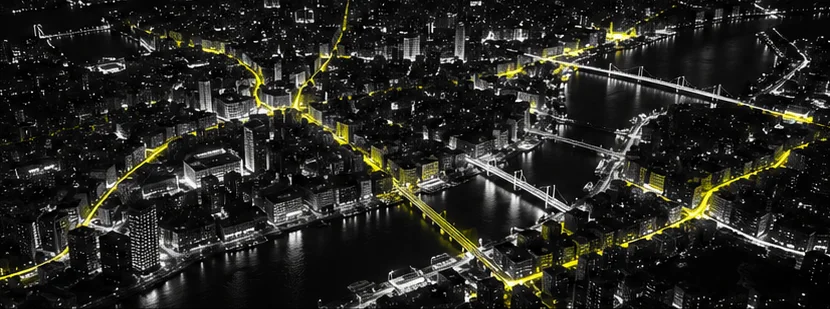
Electronic music is a map of places as much as a list of genres. House came from Chicago, techno from Detroit, trip hop from Bristol and amapiano from South Africa’s townships. These answers explain what each city or scene added, with the clubs, labels, records and years that matter. Radio Glamorize itself is based in Istanbul.
Key takeaways
- Chicago gave the world house music and Detroit gave it techno, both in the 1980s and both from Black musical communities.
- A 1987 trip to Ibiza by London DJs including Paul Oakenfold and Danny Rampling helped spark Britain’s acid house boom.
- Amsterdam Dance Event has been held every October since 1996, and Detroit’s Movement festival began in 2000.
- Manchester’s Haçienda, run by Factory Records and New Order, was open from 1982 to 1997.
- South Africa produced gqom in Durban and amapiano in Gauteng, two styles that spread worldwide from the late 2010s.
On this page
- Why is Chicago called the home of house music?
- Why is Detroit important to electronic music?
- What is Detroit’s Movement festival?
- Why is Berlin called the capital of techno?
- What role did Ibiza play in dance music history?
- What is Amsterdam Dance Event?
- What is French touch, and why is Paris important to house music?
- Why is Cologne important to electronic music, and what is Kompakt?
- Which electronic music genres came from the UK?
- What was the Haçienda in Manchester?
- Why is Bristol linked with trip hop?
- Which electronic music styles come from South Africa?
- Why is Tbilisi known for techno?
- Where does Istanbul fit on the electronic music map?
Where it began: Chicago and Detroit
Why is Chicago called the home of house music?
Chicago is called the home of house music because house was born there: in clubs such as the Warehouse, which opened in 1977, and the Music Box, on local radio mix shows, and on records pressed by Chicago labels such as Trax and DJ International from the mid-1980s.
Radio mattered as much as clubs: the WBMX mix show the Hot Mix 5, featuring DJs such as Farley “Jackmaster” Funk, brought the sound to listeners across the city. Records such as Marshall Jefferson’s “Move Your Body” (1986) and Larry Heard’s “Can You Feel It” (1986), released as Mr. Fingers, defined the early sound. The city kept producing new styles: ghetto house in the 1990s, on labels such as Dance Mania, and then juke and footwork, fast and fractured styles brought to a wider audience by Planet Mu’s “Bangs & Works” compilations from 2010. The origin story is told in the history of electronic dance music.
Why is Detroit important to electronic music?
Detroit is important to electronic music because it is the birthplace of techno, created there in the 1980s by Juan Atkins, Derrick May and Kevin Saunderson, and because each later generation of Detroit artists has kept the city at the centre of techno and deep house.
A second wave from around 1990 added a harder, more political edge: Underground Resistance, founded by “Mad” Mike Banks and Jeff Mills, stood for independence from the major labels and for anonymity, and Robert Hood helped define minimal techno. Carl Craig founded Planet E in 1991, and across the river in Windsor, Ontario, Richie Hawtin and John Acquaviva started Plus 8 in 1990. Detroit’s house side is just as strong, with producers such as Moodymann and Theo Parrish. The city’s sound draws on Motown, funk and the Electrifying Mojo’s radio shows as much as on European electronics, and Detroit labels have long been known for vinyl releases that DJs around the world seek out.
What is Detroit’s Movement festival?
Movement is Detroit’s electronic music festival, which began in Hart Plaza on the city’s riverfront in May 2000 as the Detroit Electronic Music Festival, a celebration of the city’s role in creating techno.
Carl Craig was the festival’s first artistic director, and its early editions were free to attend and drew large crowds. The event changed names and organisers in its early years, with Derrick May and Kevin Saunderson each in charge of editions, before the Detroit promoter Paxahau took it over in the mid-2000s under the Movement name. Its line-ups have traditionally mixed Detroit’s founding figures and local DJs with international techno and house artists, and club parties across the city run alongside it. For a first visit, it is a chance to hear techno in the city where it began. Other festivals and their founding years are in the festivals and clubbing guide.
Europe’s club capitals
Why is Berlin called the capital of techno?
Berlin is called the capital of techno because, since reunification in 1990, it has built an unusually dense club culture around techno: parties that can run through a whole weekend, clubs in former industrial buildings, and labels and record shops with worldwide influence.
The foundations were laid in the early 1990s, when clubs such as Tresor (1991) opened in spaces left empty after the Wall fell. Mark Ernestus’s record shop Hard Wax, founded in 1989, and the Basic Channel label he started with Moritz von Oswald in 1993 shaped dub techno. Berghain, which opened in 2004 in a former power station in Friedrichshain, became one of the world’s most famous clubs, known for its strict door and its no-photos culture. From the 2000s, relatively cheap rents drew DJs, producers and labels from around the world to live in the city. The 1990s story is in the history of electronic dance music.
What role did Ibiza play in dance music history?
Ibiza gave dance music the Balearic sound and a direct spark for Britain’s acid house boom: in 1987 a group of London DJs, including Paul Oakenfold, Danny Rampling, Nicky Holloway and Johnny Walker, heard Alfredo play at Amnesia and took the idea home.
Alfredo Fiorito’s sets at Amnesia mixed Chicago house with pop, rock, Italian disco and anything else that worked under the open sky, an eclectic approach that became known as Balearic. Back in London, the visitors started nights such as Shoom and Spectrum that helped launch the Second Summer of Love. The island already had large clubs, including Pacha, which opened in 1973, and from the 1990s British club brands and DJs spent their summers there, making Ibiza one of the world’s most famous clubbing destinations. The island’s sunset culture also fed chillout music, covered in the ambient, chillout and downtempo guide.
What is Amsterdam Dance Event?
Amsterdam Dance Event (ADE) is an annual electronic music conference and club festival held in Amsterdam every October since 1996, combining industry talks and workshops by day with a city-wide programme of club nights and concerts after dark.
ADE began in 1996 as a meeting point for the electronic music business: labels, agents, promoters, producers and artists. Its daytime side covers the industry, production and technology, while the night side spreads across clubs, concert halls and other venues around the city. ADE reflects the Netherlands’ strong place in dance music, from Rotterdam’s gabber in the early 1990s to trance figures such as Tiësto and Armin van Buuren and the techno festival Awakenings, founded in 1997. For visitors, the city’s compact size is part of the appeal: many venues are a short ride apart by bike or tram.
What is French touch, and why is Paris important to house music?
French touch is the name given to the wave of house music that came out of Paris in the mid- to late 1990s, built on filtered disco samples and heavy compression, with Daft Punk’s “Homework” (1997) as its most famous album.
Key records include Étienne de Crécy’s “Super Discount” (1996), Motorbass’s “Pansoul” (1996) and the one-off trio Stardust’s “Music Sounds Better with You” (1998), which featured Daft Punk’s Thomas Bangalter; Cassius were part of the same wave. Laurent Garnier, who had played at Manchester’s Haçienda, co-founded the label F Communications in 1994 and gave the city a deeper techno side. Air’s “Moon Safari” (1998) showed the gentler, downtempo side of the same generation. In the 2000s Ed Banger Records, founded by Pedro Winter, and the duo Justice carried a rougher electro sound. The short definition of the style is in electronic music subgenres explained, under French house.
Why is Cologne important to electronic music, and what is Kompakt?
Cologne matters to electronic music twice over: its WDR studio pioneered electronic composition in the 1950s, and since 1998 the city has been home to Kompakt, a label, record shop and distributor that defined a melodic, minimal strand of techno.
Kompakt grew out of the city’s 1990s record shop scene; its founders include Wolfgang Voigt, Michael Mayer and Jürgen Paape. Voigt’s own project Gas is a landmark of ambient techno. The label’s “Total” compilations, released yearly from 1999, and its “Pop Ambient” series showed the range of the “sound of Cologne”: minimal grooves, pop hooks, shuffling “schaffel” rhythms and soft ambient pieces. Artists such as Superpitcher, The Field and Gui Boratto took it to an international audience. Earlier, two founders of the Cologne band Can, formed in 1968, had studied with Karlheinz Stockhausen. Any “Total” volume makes a good overview of the label.
Britain’s scenes
Which electronic music genres came from the UK?
The UK gave electronic music a remarkable run of homegrown genres, including jungle and drum and bass in the early 1990s, UK garage in the mid- to late 1990s, and grime and dubstep in the early 2000s, most of them born in London and spread by pirate radio.
Each style grew from the one before and from Caribbean sound system culture. UK garage took the garage and house of New York and New Jersey, sped it up and chopped the beats into 2-step. Grime came out of East London in the early 2000s, with MCs such as Wiley and Dizzee Rascal, whose “Boy in da Corner” won the Mercury Prize in 2003. Dubstep grew in Croydon and south London in the same years, with Skream, Benga and Digital Mystikz, the club night FWD>> and, from 2005, the DMZ nights in Brixton. Pirate stations such as Rinse FM were the scene’s lifeline. The genre comparisons include UK garage vs 2-step.
What was the Haçienda in Manchester?
The Haçienda was a Manchester club run by Factory Records and the band New Order, open from 1982 to 1997, which became one of Britain’s most important acid house venues from 1988 and the centre of the city’s “Madchester” era.
Designed by Ben Kelly and given the Factory catalogue number FAC 51, the club opened in May 1982 and struggled for years as a live venue. In the late 1980s DJs such as Mike Pickering and Graeme Park made it a house music club, and bands such as Happy Mondays and The Stone Roses blurred the line between indie and dance culture around it. Money problems and gang-related violence troubled its later years, and it closed in 1997; the site was later redeveloped as flats. The story of Factory boss Tony Wilson and the club is dramatised in the film “24 Hour Party People” (2002).
Why is Bristol linked with trip hop?
Bristol is linked with trip hop because the slow, bass-heavy blend of hip hop beats, dub, soul and cinematic atmosphere later called trip hop was largely shaped there in the early and mid-1990s by Massive Attack, Portishead and Tricky.
The roots are in the city’s sound system culture, influenced by its Caribbean community, and in the Wild Bunch, a 1980s collective of DJs and musicians from which Massive Attack emerged. Massive Attack’s “Blue Lines” (1991), Portishead’s “Dummy” (1994), which won the Mercury Prize in 1995, and Tricky’s “Maxinquaye” (1995) defined the sound. The name trip hop came from the British music press in the mid-1990s, and several of the Bristol artists disliked it. The city kept producing bass music: Roni Size and Reprazent took drum and bass to the Mercury Prize in 1997, and Pinch’s Tectonic label made Bristol a dubstep centre. The trip hop vs downtempo comparison explains the neighbouring style.
Newer centres: South Africa, Tbilisi and Istanbul
Which electronic music styles come from South Africa?
South Africa has produced several influential electronic styles, including kwaito in the 1990s, gqom from Durban in the early 2010s and amapiano from the townships of Gauteng in the mid-2010s, all rooted in a long-standing love of house music.
House became part of the South African mainstream in a way it rarely did elsewhere, and Black Coffee won the Grammy for Best Dance/Electronic Album in 2022 for “Subconsciously”. Gqom is raw and minimal, with broken, rolling kick patterns; DJ Lag is among its most prominent producers. Amapiano mixes deep house chords, jazzy piano and the booming “log drum” bass at a relaxed tempo, and spread worldwide around 2019 and 2020 through artists such as Kabza De Small and DJ Maphorisa. In 2024 Tyla won the first Grammy for Best African Music Performance with “Water”, an amapiano-influenced pop song. The Afro house vs amapiano comparison explains the difference.
Why is Tbilisi known for techno?
Tbilisi, the capital of Georgia, became known for techno in the 2010s, when clubs such as Bassiani, which opened in 2014 beneath the city’s national football stadium, built a scene that linked hard, fast techno with youth culture and calls for personal freedom.
Bassiani was built in a drained swimming pool beneath the Dinamo Arena, and its Horoom nights gave space to the city’s LGBTQ+ community. In May 2018, armed police raided Bassiani and another club, Café Gallery, which led to protests outside the Georgian parliament where thousands of people danced to techno in the street, an event reported around the world. The scene came to stand for a young generation’s push for personal freedom in a socially conservative country. Like Berlin in the early 1990s, Tbilisi showed how a club scene can carry meaning far beyond music. Club programmes and policies change, so check current information before planning a visit.
Where does Istanbul fit on the electronic music map?
Istanbul brings a meeting of Europe and Asia to electronic music: a club and radio scene that grew from the 1990s onwards, known for deep house and melodic styles that often weave in Turkish and Middle Eastern instruments and melodies.
Producers draw on the oud, ney, bağlama and darbuka, on Sufi music and on Anatolian rock, which has made Turkish re-edits and “oriental” deep house a recognisable sound abroad. Artists known internationally include Mercan Dede, who blends Sufi music with electronics, and the deep house producer Mahmut Orhan. Summer brings open-air parties to the coasts. Radio Glamorize, based in Istanbul, broadcasts 24 hours a day without ad breaks, with resident DJs, many of them from the Turkish scene, plus guests. The full picture, including Istanbul time for live listening, is in the Istanbul and Turkey electronic music guide.
Read next
On air now
The quickest way into electronic music is to listen.
Radio Glamorize streams deep house, dub techno, electronica and ambient 24/7, with no ad breaks. Free in the browser, no app needed.


